
 listicle
Best Power Washing for Driveways: 2026 Guide
Table of Contents
- What Makes Power Washing Driveways Actually Work
- Best PSI for a Concrete Driveway
- Top Power Washers for Driveways Compared
- How to Remove Oil Stains from a Driveway
- Driveway Pressure Washing Cost: DIY vs. Professional
- Environmental Impact of Pressure Washer Runoff
- Pump Maintenance and Pressure Washer Longevity
- Conclusion
Last Updated: August 29, 2026
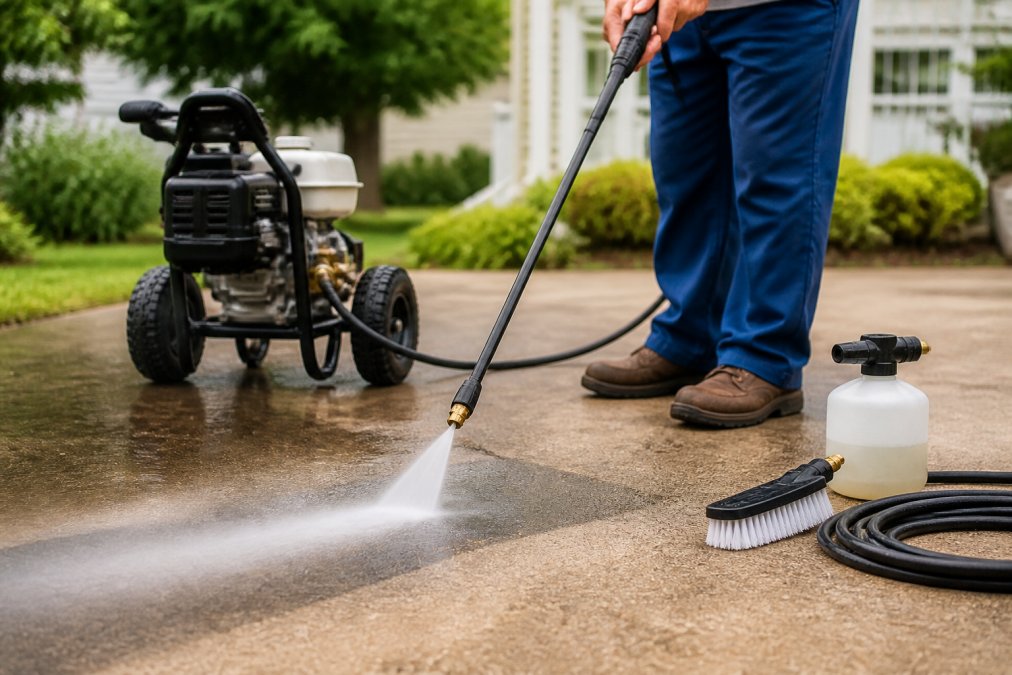
Most homeowners underestimate what separates a clean driveway from a truly restored one. The best power washing for driveways isn't just about blasting water at concrete, it's about matching the right PSI, GPM, nozzle, and technique to the surface in front of you. Get that wrong, and you're either leaving grime behind or etching permanent damage into the slab. This guide exists to help you avoid them.
Quick Picks:
- Best professional service: Hot Shotz Mobile Power Wash, expert results without the equipment hassle
- Best gas pressure washer: Simpson PowerShot 3300 PSI, Honda engine, heavy-duty output
- Best electric for most homeowners: Ryobi 2300 PSI with included surface cleaner
- Best budget electric: Westinghouse ePX3050, compact, affordable, capable
What Makes Power Washing Driveways Actually Work
Effective driveway cleaning comes down to two numbers: PSI (pounds per square inch) and GPM (gallons per minute). PSI measures water pressure; GPM measures flow rate. High PSI with low GPM punches through stains but leaves residue behind. High GPM with insufficient PSI won't break the bond between embedded grime and concrete. The sweet spot for concrete driveway cleaning sits between 2,500 and 3,200 PSI paired with at least 2.0 GPM. Cleaning units (CU), calculated by multiplying PSI x GPM, give you a single comparison number: aim for at least 5,000 CU for serious driveway work.
Gas vs. Electric Pressure Washers for Driveways
Gas-powered pressure washers consistently outperform electric models for driveway cleaning. They deliver higher PSI and GPM combinations, run without a cord, and handle large surface areas without thermal overload. The tradeoff: they require oil changes, spark plug checks, fuel storage, and are louder and heavier.
Modern electric pressure washers have improved significantly. Brushless-motor units like the Ryobi 2300 PSI reach cleaning power levels that handle most residential driveways adequately. They're quieter, require minimal maintenance, and are safe in enclosed areas. For driveways under 500 square feet with light-to-moderate soiling, a quality electric unit works well.
For heavily stained concrete, large driveways, or properties that haven't been cleaned in years, gas is the right call. The Simpson PowerShot 3300 PSI and Generac SpeedWash 3200 PSI both operate at efficiency levels where driveway cleaning becomes genuinely effective.
Surface Cleaner Attachments and Nozzle Tips
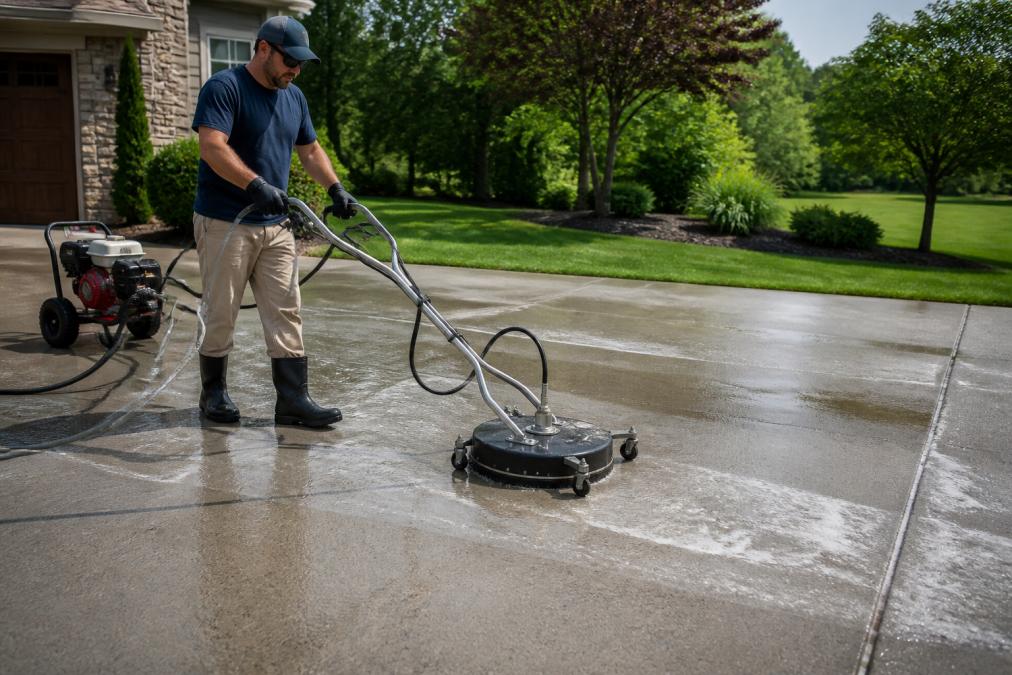
A surface cleaner attachment is a rotating bar with two nozzles enclosed in a circular housing. It replaces the standard wand for flat surfaces and produces a consistent, streak-free clean across the full width (typically 12-15 inches). Without one, even experienced operators leave visible wand lines in the concrete. The Ryobi 2300 PSI includes a 15-inch surface cleaner.
For nozzle tips, the 25-degree tip is standard for concrete cleaning, wide enough to avoid surface etching, focused enough to agitate embedded dirt. The 15-degree tip works for stubborn spots and edges. Never use the 0-degree (red) nozzle on driveways; it concentrates pressure into a pinpoint stream that can score and pit concrete permanently.
Best PSI for a Concrete Driveway
The best PSI for a concrete driveway is between 2,500 and 3,200 PSI. This range provides enough pressure to break up embedded dirt, oil residue, and biological growth without risking surface etching on standard residential concrete. Older or decorative concrete may require 1,500-2,000 PSI to avoid damage.
According to Pressure Washer Institute guidelines on surface cleaning, matching PSI to surface hardness is the primary factor in preventing pressure washing damage. For sealed or stamped concrete, reduce pressure and increase dwell time with detergent instead.
Asphalt driveways require a different approach. Asphalt is softer than concrete and can be stripped by pressure above 1,500 PSI. Use a 40-degree nozzle, keep the wand moving, and stay at least 12 inches from the surface.
Surface-Specific Damage Risks to Avoid
The biggest mistake in driveway pressure washing is treating all surfaces the same:
- Concrete: Holding the wand too close or using a 0-degree nozzle creates surface etching, shallow grooves that trap future dirt
- Pavers: High-pressure direct spray erodes the sand between joints; use a wide-angle nozzle and re-sand after cleaning
- Asphalt: Excessive PSI strips the binder from aggregate, causing crumbling and accelerating deterioration
- Stamped or decorative concrete: Pressure washing can fade sealant and lift embedded color; always test an inconspicuous area first
- Expansion joints: Never direct high-pressure spray into expansion joint filler; it will dislodge the material and create water infiltration points
Start at lower PSI and greater distance, then work closer only if the surface responds without damage.
Top Power Washers for Driveways Compared
Choosing the right machine depends on driveway size, stain severity, and frequency of use.
1. Hot Shotz Mobile Power Wash, Best for Professional Results
Skip the equipment entirely. Hot Shotz Mobile Power Wash brings commercial-grade equipment and tailored cleaning solutions to residential and commercial properties. The team handles surface assessment, correct pressure selection, and detergent choice, the variables that cause most DIY mistakes.
2. Simpson PowerShot 3300 PSI (PS3228), Best Gas Pressure Washer
The Simpson PowerShot runs on a Honda GX200 engine and delivers 3,300 PSI at 2.5 GPM. The maintenance-free axial cam pump maintains higher pressure over long hose runs. Five quick-connect nozzle tips are included. This professional-grade machine handles large driveways, heavy oil staining, and years of accumulated grime without straining. Starting price: $599.99.
3. Generac SpeedWash 3200 PSI, Best for Speed
The Generac SpeedWash features a PowerDial spray gun that switches between car, wood, concrete, and soap settings without changing nozzles. At 3,200 PSI and 2.7 GPM, it has the highest GPM in this comparison, translating to faster rinsing on large surfaces. Starting price: $399.00.
4. Ryobi 2300 PSI Electric (RY142300), Best Electric for Driveways
The Ryobi 2300 PSI is the electric model worth recommending for driveway work, primarily because it includes a 15-inch surface cleaner. The brushless induction motor runs quieter and longer than universal motors, and 2,300 PSI handles most residential concrete effectively. Starting price: $239.00.
5. Karcher K5 Premium, Best for Durability
The Karcher K5 runs a water-cooled induction motor, which extends motor life significantly. At 2,000 PSI and 1.4 GPM, it sits at the lower end of effective driveway cleaning power, but the build quality and included hose reel make it a long-term investment. Starting price: $299.99-$389.91.
| Machine | PSI | GPM | Power Source | Starting Price | Best For |
|---|---|---|---|---|---|
| Hot Shotz Mobile Power Wash | Commercial grade | Commercial grade | Professional service | Contact for quote | Professional results, no equipment needed |
| Simpson PowerShot PS3228 | 3,300 | 2.5 | Gas | $599.99 | Heavy staining, large driveways |
| Generac SpeedWash 3200 | 3,200 | 2.7 | Gas | $399.00 | Speed and large surface area |
| Ryobi RY142300 | 2,300 | 1.2 | Electric | $239.00 | Residential electric with surface cleaner |
| Karcher K5 Premium | 2,000 | 1.4 | Electric | $299.99-$389.91 | Long-term durability |
| Westinghouse ePX3050 | 2,100 | 1.76 | Electric | $109.00-$109.99 | Budget-conscious homeowners |
How to Remove Oil Stains from a Driveway
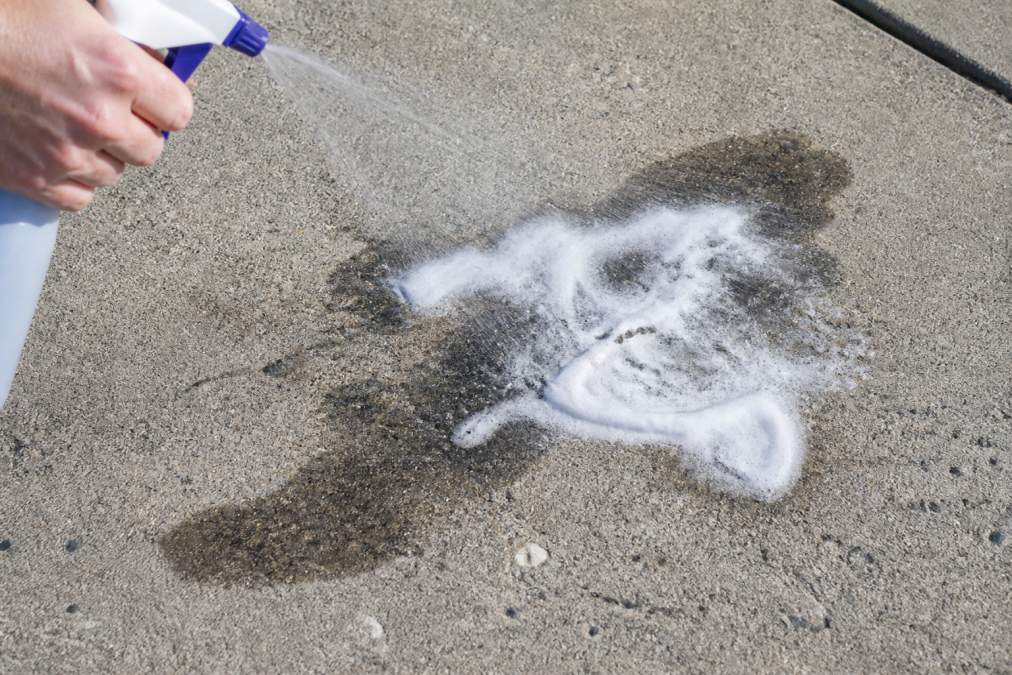
Oil stain removal requires pre-treatment before pressure washing. Pressure alone will not pull oil out of concrete; it will spread it. The correct sequence is: degrease, agitate, dwell, then wash.
Step-by-step oil stain removal:
- Absorb fresh oil with cat litter or sawdust, let it sit for 30 minutes, then sweep
- Apply concrete degreaser directly to the stain; many pressure washer detergent tanks apply degreaser through the chemical injector
- Scrub the degreaser into the concrete with a stiff-bristle brush to break the oil bond
- Allow the degreaser to dwell for 10-15 minutes
- Rinse with the pressure washer at 2,500+ PSI using a 25-degree nozzle, working from the outside of the stain inward
- Repeat for older, set-in stains; one treatment rarely removes heavy deposits completely
For stains older than six months, enzymatic cleaners that biologically break down petroleum compounds work better than standard degreasers.
As documented in EPA guidance on concrete cleaning and runoff management, petroleum-based cleaning runoff should not be directed into storm drains.
Removing Moss and Mildew from Concrete
Moss and mildew on driveways aren't just cosmetic. Both retain moisture against the concrete surface, accelerating freeze-thaw cracking and staining.
Apply a sodium hypochlorite (bleach) solution or purpose-formulated concrete mildewcide before pressure washing. Allow 10-15 minutes of dwell time; the chemical kills the biological growth at the root. Rinse with the pressure washer at 2,000-2,500 PSI; dead moss releases easily, live moss does not.
Pressure washing alone removes visible moss but leaves spores behind. Without a chemical treatment step, regrowth appears within weeks.
Driveway Pressure Washing Cost: DIY vs. Professional
DIY costs include equipment purchase (or rental), detergents, and your time. A capable electric pressure washer runs $109-$299. A gas machine capable of serious driveway work starts around $289-$600.
Professional pressure washing pricing varies based on driveway size, surface condition, and regional rates. Contact Hot Shotz Mobile Power Wash directly for a quote tailored to your property.
Rental vs. Purchase ROI
Renting a gas pressure washer typically costs $50-$100 per day. That makes rental cost-effective if you're cleaning once per year or less.
The math shifts toward purchase if you're cleaning multiple surfaces (driveway, deck, siding, patio) in the same session, or if you're doing this twice a year or more. A $400 gas machine pays for itself against rental costs in four to eight uses.
Environmental Impact of Pressure Washer Runoff
Pressure washer runoff carries detergents, petroleum compounds, biological material, and sediment into storm drains. Most residential storm drains connect directly to local waterways without treatment. Discharging contaminated runoff into storm drains violates the Clean Water Act in many municipalities.
Practical steps to reduce environmental impact:
- Use phosphate-free, biodegradable detergents rated safe for outdoor use
- Contain runoff where possible using inflatable berms or directing flow toward permeable landscaping
- Avoid cleaning on days before heavy rain, which amplifies runoff volume
- For oil stain removal, absorb and dispose of pre-treatment residue as hazardous waste rather than washing it into the drain
The EPA stormwater management resources for residential properties provides guidance on managing residential runoff during cleaning activities. Biodegradable detergents cost only marginally more than conventional options and significantly reduce environmental impact.
Pump Maintenance and Pressure Washer Longevity
The pump is the most expensive component of any pressure washer and the most common failure point. Proper maintenance extends pump life from two or three seasons to a decade or more.
For electric pressure washers:
- Never run the machine without water flowing through the pump; dry-running destroys pump seals within minutes
- Use the Total Stop System (TSS) or auto-stop feature whenever you pause
- Flush the system with clean water after using detergents
- Store with the trigger depressed briefly to release residual pressure
For gas pressure washers:
- Change the pump oil after the first 50 hours and every 100 hours thereafter
- Use pump saver or antifreeze solution before winter storage to prevent seal damage from freezing water
- Check the engine oil before every use
- Inspect the high-pressure hose for kinks and abrasion
The pump durability difference between commercial-grade and consumer-grade machines is substantial. Commercial pumps are rated for hundreds of hours of continuous use. Consumer pumps are rated for intermittent residential use, typically 50-100 hours per year.
The challenge with driveway pressure washing is that the gap between adequate and excellent comes down to technique and equipment matching. Hot Shotz Mobile Power Wash brings commercial-grade equipment, surface-specific expertise, and proper detergent selection to every job, whether that's a residential driveway in St. Charles or a commercial exterior in St. Louis. The team handles the variables that cause DIY results to fall short: correct PSI for the surface, pre-treatment for stains, and safe runoff management. Contact Hot Shotz Mobile Power Wash for a quote and get professional results without the equipment investment.
Frequently Asked Questions
Q: What is a fair price to power wash a driveway?
A: Driveway pressure washing cost varies based on driveway size, surface condition, and whether you hire a professional or do it yourself. DIY equipment ranges from around $110 to $600 depending on PSI and features. Professional services factor in labor, equipment, and cleaning solutions. For an accurate quote tailored to your driveway, contact a local provider directly rather than relying on generic estimates that may not reflect your property's actual needs.
Q: What is a good PSI for a pressure washer for a driveway?
A: For standard concrete driveways, 2500 to 3200 PSI is the most effective range. Lower PSI, under 2000, works for light surface dirt but struggles with embedded grime and stains. Gas-powered units in the 3000+ PSI range paired with a GPM of 2.5 or higher provide the cleaning power needed for heavily soiled surfaces. Always pair your PSI selection with the correct nozzle tip to avoid surface etching on older or softer concrete.
Q: What should I pretreat my driveway with before pressure washing?
A: For general grime, a concrete degreaser or alkaline cleaner applied 5 to 10 minutes before washing loosens buildup and improves cleaning efficiency. Oil stains benefit from a dedicated degreaser or a baking soda paste scrubbed in before rinsing. Moss and mildew respond well to a diluted bleach solution left to dwell briefly before washing. Always rinse pretreatment chemicals thoroughly to prevent runoff from reaching storm drains or landscaping.
Q: Is it better to hire a professional or rent a power washer for a driveway?
A: Renting makes sense for a one-time job on a straightforward surface, but the cost adds up quickly when you factor in rental fees, detergent, and your time. Professionals bring commercial-grade equipment, proper nozzle selection, and knowledge of surface-specific damage risks, which matters especially for older concrete, pavers, or second-story areas. For recurring maintenance or complex stains like oil and mildew, professional power washing for driveways typically delivers better long-term results.
Q: How often should you power wash a concrete driveway?
A: Most concrete driveways benefit from thorough power washing once or twice a year. High-traffic driveways, those under heavy tree cover, or surfaces prone to oil drips may need cleaning every three to four months. Annual cleaning before winter helps remove salt and grit that accelerate concrete deterioration. If you notice visible staining, moss growth, or a slippery surface texture, that is a signal to schedule a cleaning regardless of the calendar.
This article was written using GrandRanker